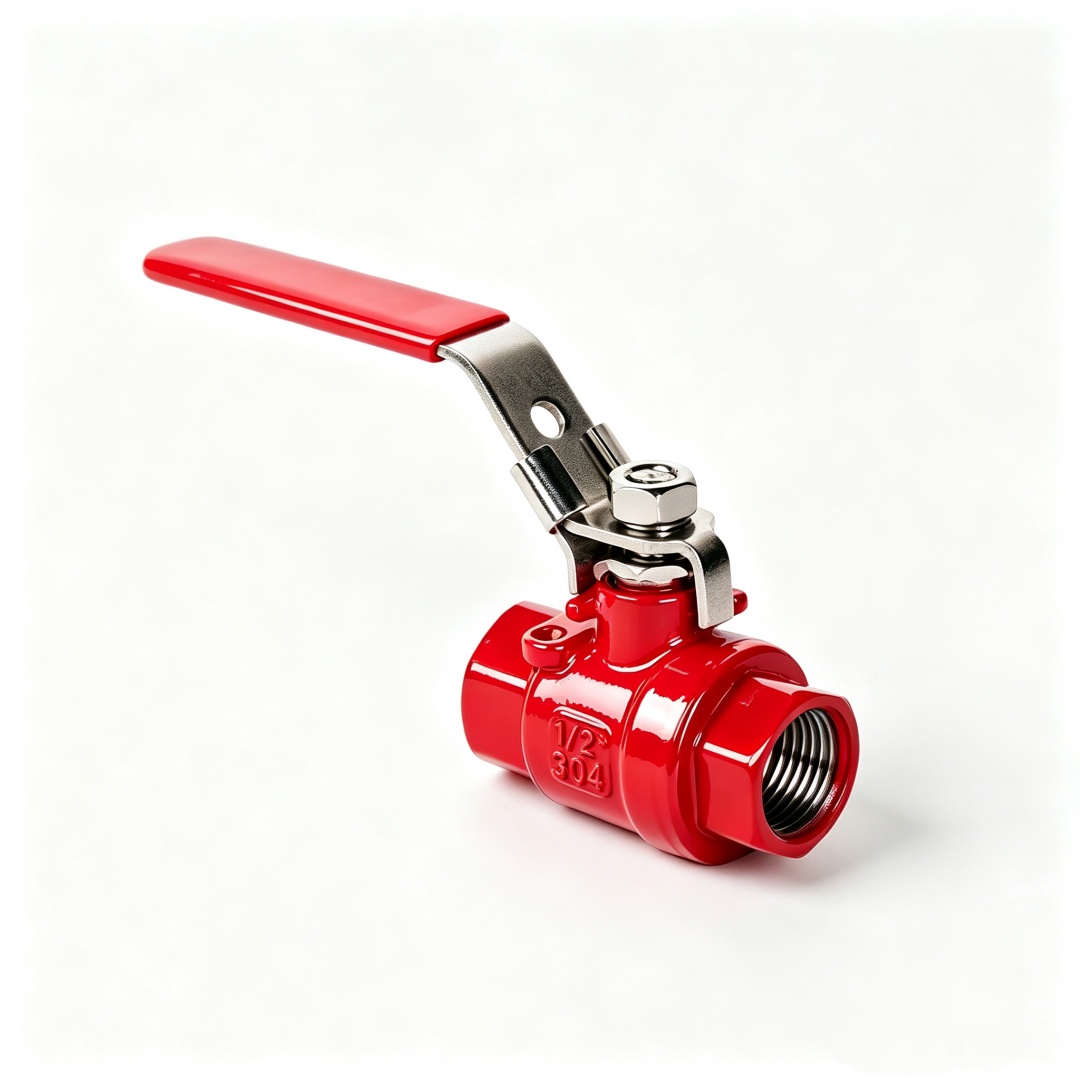

Backflow prevention, pressure loss, and water hammer remain important concerns in high-flow industrial pipeline systems. When conventional check valves close too slowly or the disc slams against the valve seat, the resulting pressure fluctuations can place additional stress on pumps, piping, instruments, and connected equipment. Selecting an appropriate non-slam check valve can help address these operating challenges.
The ZLH41H Axial Flow Check Valve is designed for one-way flow control in industrial fluid systems. Its axial flow configuration, spring-assisted disc movement, and engineered sealing surfaces support responsive closure and controlled operation. Available material options include carbon steel, stainless steel, alloy steel, and 2205 duplex stainless steel, subject to the requirements of the selected configuration.
For pipeline operators, engineering contractors, and equipment manufacturers, understanding the valve's operating principle, material options, pressure ratings, and application limits is essential when specifying a check valve for demanding service conditions.
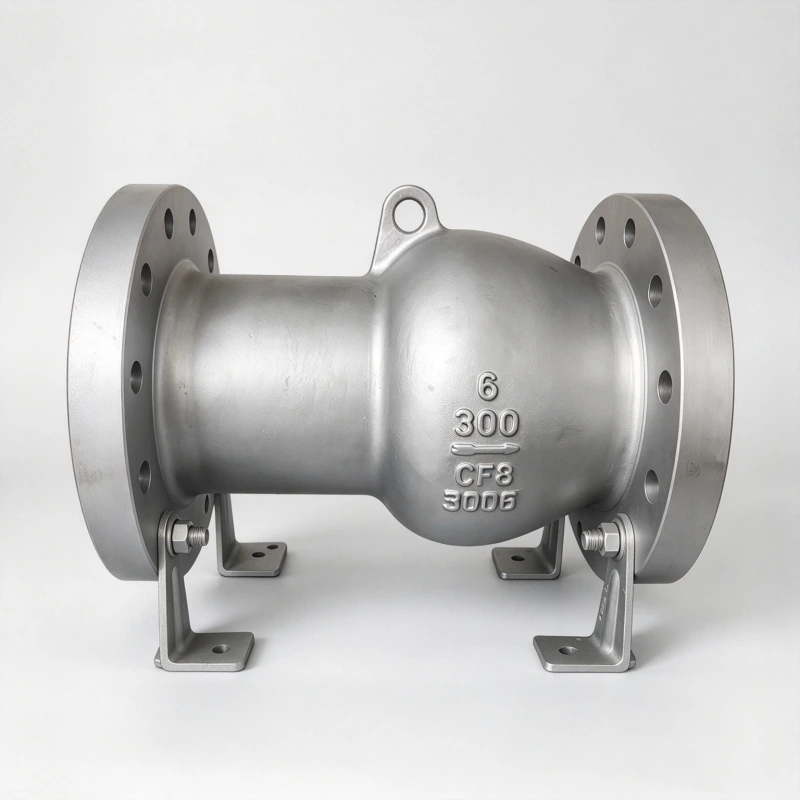
An axial flow check valve is an automatic valve that allows fluid to move in the intended direction and restricts reverse flow. Unlike manually operated valves, it responds to changes in flow conditions without requiring an external actuator.
In an axial flow design, the closure member moves along an axis parallel to the main flow direction. This arrangement can provide a relatively direct flow path and short disc travel, depending on the internal geometry.
The ZLH41H Axial Flow Check Valve uses a spring-assisted closure mechanism to help the disc return toward the seat when forward flow decreases or reverses. The spring contributes to the closing response, while the sealing components help restrict reverse leakage.
The actual closure behavior depends on factors such as spring characteristics, disc mass, fluid velocity, pressure differential, and the dynamic response of the pipeline. Correct valve selection therefore requires more than matching the nominal pipe diameter and pressure class.
Water hammer is a transient pressure event caused by a rapid change in fluid velocity. It may occur when a valve closes, a pump stops, or the flow direction changes unexpectedly. Depending on the system, pressure surges can contribute to vibration, noise, leakage, and mechanical stress.
A conventional swing check valve relies on a hinged disc that moves away from and toward the seat. Under certain operating conditions, reverse flow may develop before the disc closes fully, causing the disc to strike the seat. Lift check valves can also experience impact or unstable movement if their operating conditions are unsuitable.
An axial flow check valve uses a different closure arrangement. Its disc moves along the flow axis, and a spring can help initiate closure as forward flow decreases. The objective is to reduce the opportunity for significant reverse velocity to develop before the valve closes.
The potential benefits include:
· Reduced disc impact: Spring-assisted movement can help control the disc's return toward the seat.
· Lower risk of severe pressure transients: Timely closure may reduce reverse-flow velocity and the associated surge under suitable operating conditions.
· More stable operation: A properly selected valve can help limit repeated disc movement and associated vibration.
· Protection of connected equipment: Reducing severe transient loads may help protect pumps, instruments, flanges, and downstream piping.
However, no check valve can eliminate water hammer under every operating condition. Pipeline length, fluid velocity, pump characteristics, system pressure, and closure timing all influence transient behavior. Critical applications may require a dedicated hydraulic transient analysis before the valve is selected.
Pressure loss is an important consideration in continuously operating pipelines. Excessive resistance across a valve can increase the pumping head required to maintain the target flow rate, potentially affecting energy consumption and operating costs.
The axial flow configuration is intended to provide a relatively direct passage for the process medium. Depending on the valve's internal geometry and opening characteristics, this arrangement may reduce flow resistance compared with some conventional check valve designs.
For engineering evaluation, pressure loss should be assessed using the valve's rated flow coefficient, such as Cv or Kv, or manufacturer-supplied pressure-drop data. The actual pressure drop depends on fluid properties, flow rate, valve size, and operating conditions.
When comparing an axial flow check valve with a swing or lift check valve, engineers should evaluate the available flow data for the same operating point rather than relying on valve type alone. A lower pressure drop can be beneficial in systems that operate continuously or handle substantial flow volumes.
The short disc travel associated with many axial flow designs can also support a compact configuration. This may be useful in pipeline layouts where installation space, equipment arrangement, or maintenance access is limited.
The closure mechanism is central to check valve performance. A valve must respond appropriately to changing flow conditions while maintaining reliable sealing during reverse-flow events.
The ZLH41H design incorporates a spring-assisted disc mechanism. The spring helps guide the disc toward the closed position as the forward flow decreases, with the aim of limiting reverse-flow development before seating.
Spring selection is important. An unsuitable spring characteristic may increase cracking pressure, restrict the available flow, or affect closure behavior. The valve must therefore be matched to the minimum operating flow, normal flow range, and pressure conditions of the application.
Sealing performance is another key consideration. The supplied product information describes wear-resistant, hardfaced sealing surfaces intended to support durability under demanding service conditions. The final sealing arrangement should be confirmed against the selected material and trim configuration.
For high-pressure or critical pipeline service, buyers should request the manufacturer's applicable pressure test and seat leakage criteria. Claims concerning zero leakage, long service life, or specific operating cycles should be supported by defined test methods and acceptance requirements.
Material selection affects corrosion resistance, mechanical performance, fabrication requirements, and the expected service life of a valve. The ZLH41H product range is described as available in carbon steel, stainless steel, alloy steel, aluminum bronze, and ASTM A995 Grade 4A cast duplex stainless steel.
Each material has a different suitability range. Selection should consider the process medium, chloride concentration, temperature, pressure, erosion risk, and other environmental conditions.
ASTM A995 Grade 4A is a cast duplex stainless steel grade associated with the 2205 family. Duplex stainless steels combine austenitic and ferritic microstructures, providing a balance of strength and corrosion resistance.
Compared with common 304 stainless steel, 2205 duplex stainless steel generally offers higher mechanical strength and improved resistance to chloride-related pitting and stress corrosion cracking in suitable environments. These properties can make it a candidate for demanding applications where conventional stainless steel may not provide the required performance.
Potential applications include selected oil and gas systems, chemical processing lines, and water systems exposed to corrosive conditions. Nevertheless, 2205 is not universally suitable for every corrosive medium. Chemical compatibility, temperature limits, fabrication quality, and applicable design requirements must be reviewed for each project.
|
Material |
General Characteristics |
Selection Considerations |
|
Carbon Steel |
Commonly used for general industrial and pipeline service |
Corrosion allowance, coating, process medium, and design temperature |
|
Stainless Steel |
Offers corrosion resistance for a range of fluid systems |
Exact grade, chloride concentration, temperature, and chemical compatibility |
|
Alloy Steel |
Can provide properties suited to specified pressure and temperature conditions |
Grade-specific strength, heat treatment, and temperature rating |
|
Aluminum Bronze |
May offer useful corrosion resistance in selected water and marine environments |
Fluid chemistry, erosion conditions, and exact alloy grade |
|
ASTM A995 Grade 4A Duplex Stainless Steel |
Combines relatively high strength with improved resistance to selected forms of corrosion |
Chloride exposure, temperature, pressure, and grade-specific design limits |
Material compatibility must be established using the actual fluid composition and operating conditions. The body material alone does not determine the complete valve's pressure-temperature rating or corrosion performance; trim, spring, seals, and other internal components also require evaluation.
The ZLH41H Axial Flow Check Valve is described as available in a range of sizes, pressure classes, and body materials. The following values are the supplied product range and should be verified against the manufacturer's approved data sheet before final selection.
|
Parameter |
Supplied Specification |
|
Valve Type |
Axial Flow Check Valve |
|
Model Series |
ZLH41H |
|
Nominal Size |
1/2 in to 48 in (DN15–DN1200), subject to availability |
|
Pressure Range |
Class 150 to Class 900; confirm applicable ratings for each size and design |
|
Temperature Range |
Supplied range: -20°C to 560°C; material-specific limits must be confirmed |
|
Body Material Options |
Carbon steel, stainless steel, alloy steel, aluminum bronze, and ASTM A995 Grade 4A duplex stainless steel |
|
Intended Function |
Automatic one-way flow control |
|
Closure Mechanism |
Spring-assisted disc closure |
|
Sealing Configuration |
Wear-resistant hardfaced sealing surfaces, depending on configuration |
|
Typical Applications |
Oil and gas, chemical processing, water systems, and other compatible industrial fluid services |
|
Design and Testing Standard |
API 6D compliance to be confirmed for the specified model and order |
The supplied example is ZLH41H-300Lb(4A)-150. The manufacturer should confirm the exact coding convention, but the designation is described as follows:
· ZLH41H: Axial flow check valve model series.
· 300Lb: Class 300 pressure designation, subject to the manufacturer's model coding.
· 4A: ASTM A995 Grade 4A cast duplex stainless steel, according to the supplied description.
· 150: Nominal size DN150, equivalent to NPS 6.
Class 300 is a pressure class designation, not a universal fixed operating pressure. Its allowable pressure depends on the applicable standard, material group, and operating temperature. Class 300 should not be treated as exactly interchangeable with a single PN rating in all circumstances.
Likewise, a maximum temperature stated for the overall product range should not automatically be applied to a Grade 4A duplex configuration. The applicable pressure-temperature rating must be established for the actual valve materials and design.
API Specification 6D addresses requirements for valve design, manufacturing, materials, welding, quality control, assembly, testing, marking, documentation, and process control for applicable petroleum and natural gas industry service. The current edition and applicable addenda should be checked against the project specification. <Cite refs={["turn443503search0","turn443503search11"]}/>
For procurement teams, mentioning API 6D in a product description is not sufficient by itself to establish compliance. The specific valve configuration, manufacturing facility, inspection records, and required documentation should be verified.
Depending on the purchase specification, the review may cover:
· Material identification and traceability.
· Applicable body and closure component inspection.
· Pressure-containing boundary tests.
· Seat leakage testing against the specified acceptance criteria.
· Dimensional and marking checks.
· Required inspection and test documentation.
· Confirmation of any required API Monogram licensing or certification.
Buyers should request the applicable data sheet, material certificates, pressure test records, and compliance documentation before approving a valve for a critical pipeline project. The exact requirements should be agreed upon in the purchase order and inspection plan.
The ZLH41H Axial Flow Check Valve may be considered for different industrial applications when its material, pressure rating, temperature limits, and flow characteristics match the service requirements.
In oil and gas systems, reverse flow can affect pumps, compressors, and connected pipeline equipment. A properly selected non-slam check valve may help control reverse flow and reduce the risk of disc impact during changing operating conditions. Material selection must account for the actual fluid composition and any project-specific corrosion requirements.
Chemical pipelines may contain corrosive or abrasive media, making material compatibility an important part of valve selection. Duplex stainless steel or other corrosion-resistant alloys may be suitable for particular services, but the exact chemical concentration and operating temperature must be reviewed before specifying the valve.
Water distribution, treatment, and pumping systems can experience transient pressure changes during pump start-up, shutdown, or flow reversal. A check valve with suitable closing characteristics may help manage these conditions. Wastewater service also requires attention to suspended solids, blockage risks, and internal component compatibility.
Industrial heating and utility pipelines require check valves that match the operating temperature, pressure, and fluid conditions. The valve's material-specific limits and pressure-temperature rating should be confirmed before use, particularly where elevated temperatures are involved.
Choosing a valve based only on nominal diameter and pressure class may result in unsuitable operation. Engineers and procurement teams should review several factors before confirming a specification.
Operating flow range: The valve must operate appropriately at both normal and minimum flow rates. Spring characteristics and cracking pressure should be compatible with the system.
Pressure loss: Request Cv, Kv, or pressure-drop data to evaluate the valve's resistance at the intended flow rate.
Closure dynamics: For systems with a history of water hammer, assess the required closing response and consider a hydraulic transient analysis where necessary.
Material compatibility: Verify the body, disc, spring, sealing surfaces, and other wetted components against the actual process medium.
Pressure and temperature: Confirm the applicable pressure-temperature rating for the selected material and size rather than relying on the overall product range.
Installation conditions: Check the manufacturer's requirements for flow direction, orientation, straight pipe runs, and installation clearances.
Inspection and documentation: Define the required tests, material traceability, acceptance criteria, and compliance documents before ordering.
Maintenance access: Consider the available space for inspection and servicing, as well as the expected operating conditions and maintenance schedule.
These checks help ensure that the selected valve is appropriate for the actual pipeline duty rather than simply matching the nominal connection size.
The ZLH41H Axial Flow Check Valve is designed to provide automatic reverse-flow protection through an axial closure arrangement and spring-assisted disc movement. Its intended advantages include a relatively direct flow path, responsive closure, and a compact configuration for suitable industrial pipeline applications.
For systems where water hammer, pressure loss, corrosion, or installation space are major concerns, an axial flow check valve may be a useful option to evaluate alongside other check valve designs. Its suitability depends on the operating flow range, transient behavior, fluid compatibility, and the applicable pressure-temperature rating.
Material options, including ASTM A995 Grade 4A duplex stainless steel, allow the valve specification to be adapted to different service requirements. However, final performance depends on the complete valve design, manufacturing quality, inspection results, and correct installation.
Before placing an order, project teams should confirm the model designation, nominal size, pressure class, material grade, temperature limits, and required standards with the manufacturer. A specification supported by verified technical data and application-specific engineering review provides a stronger basis for reliable long-term pipeline operation.
-