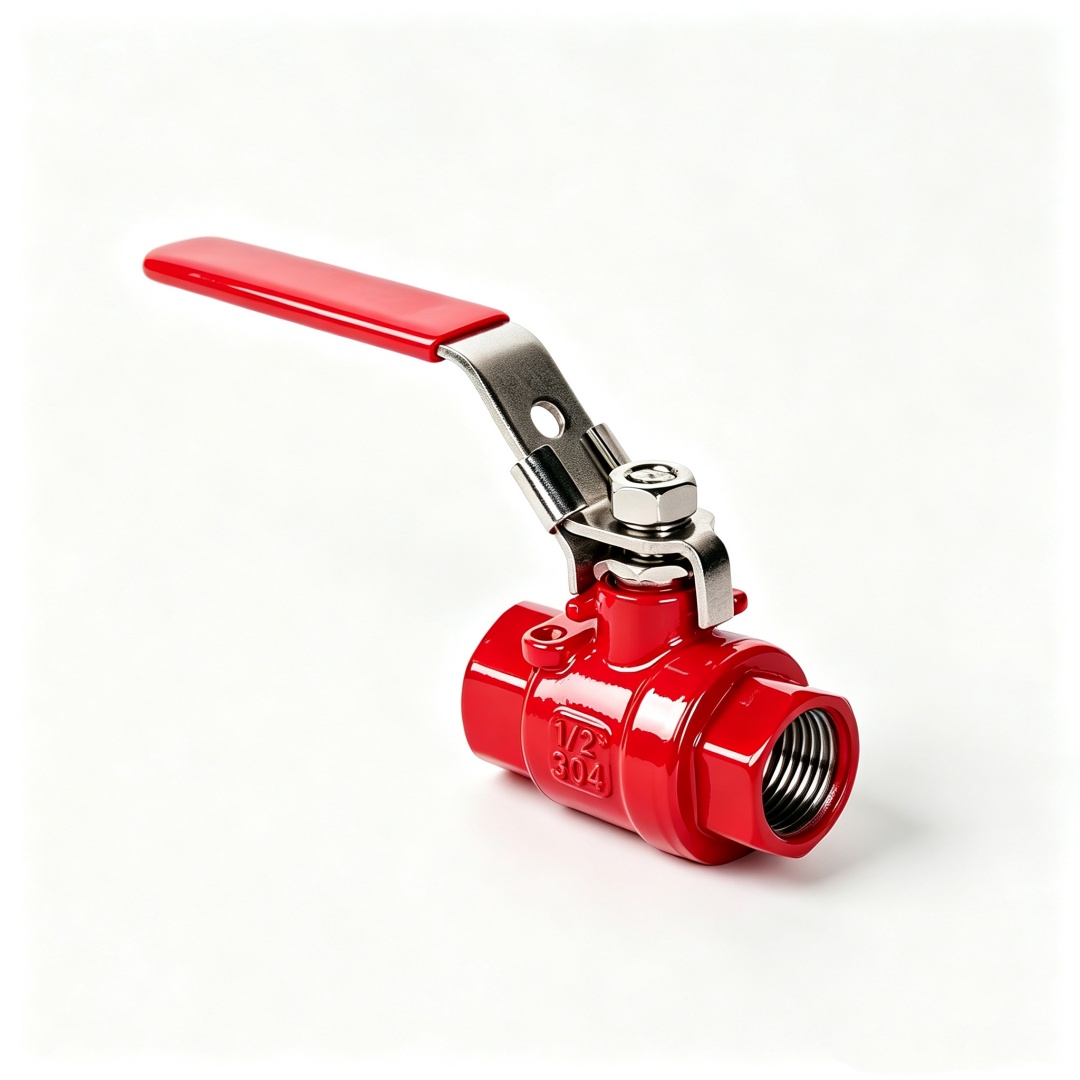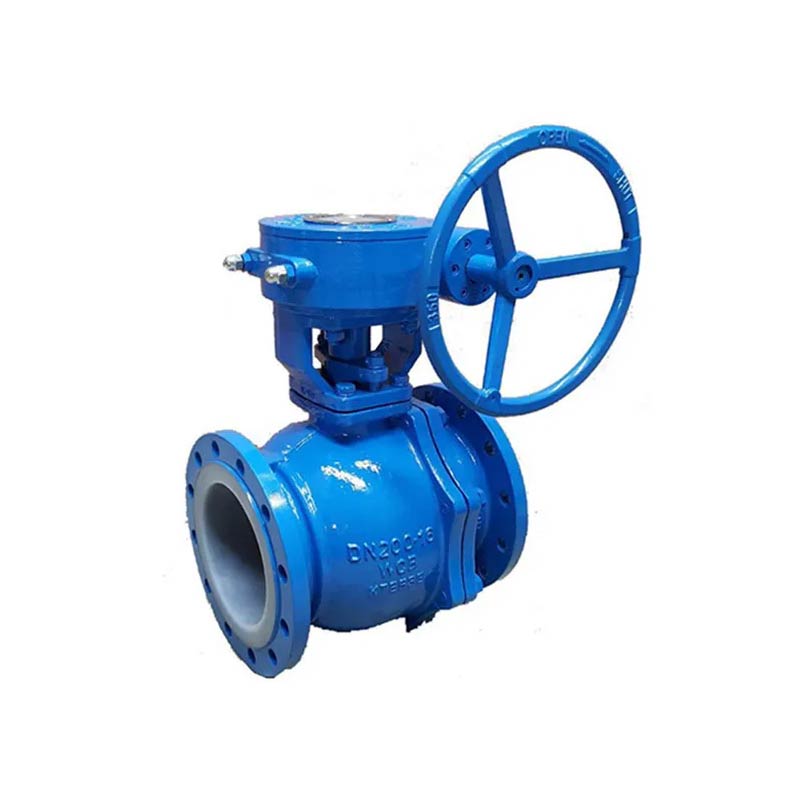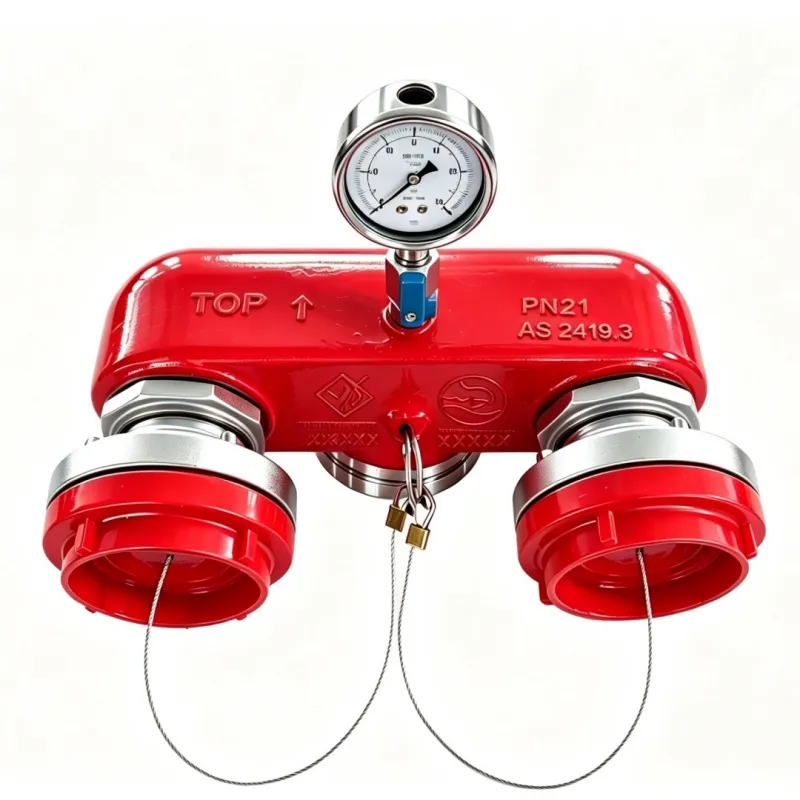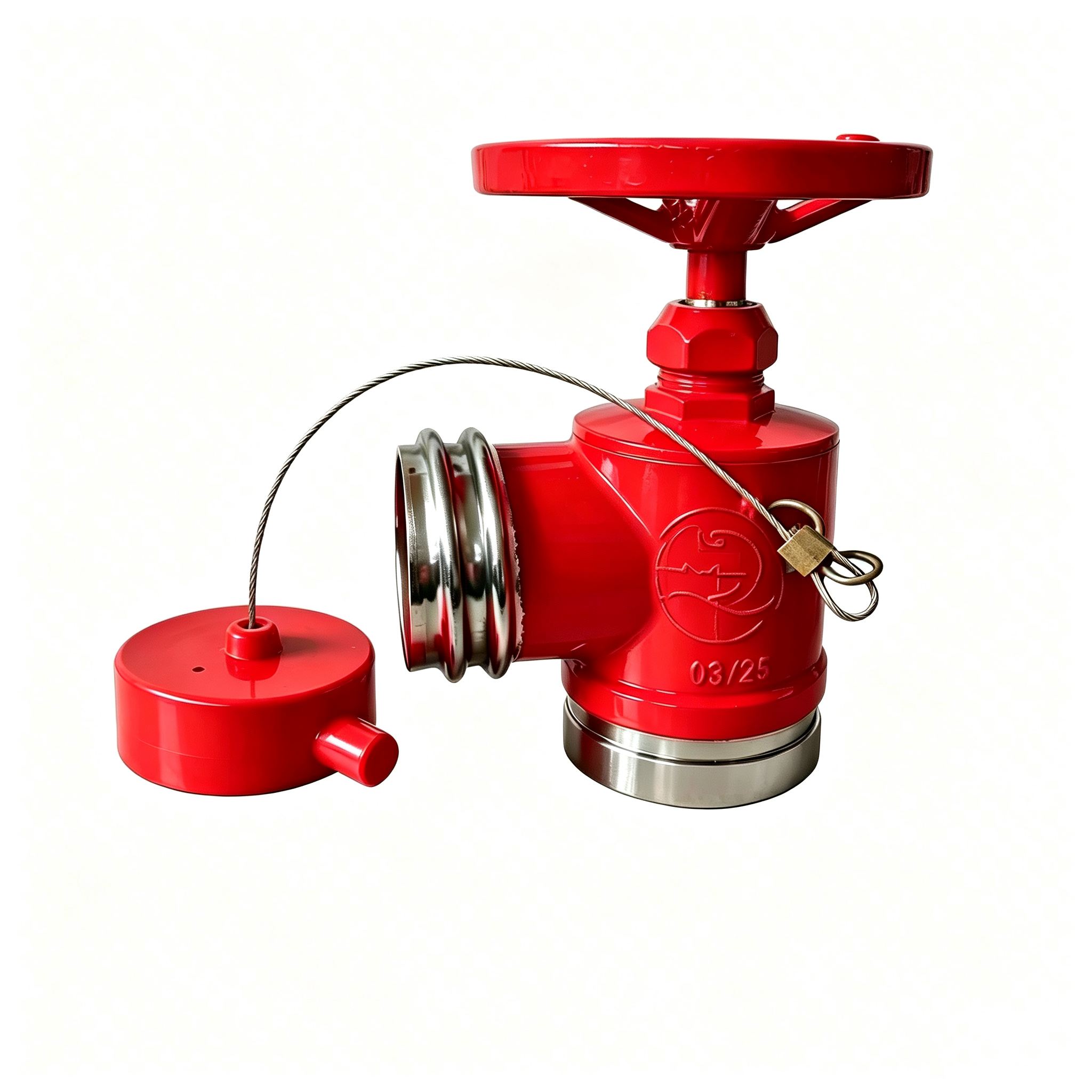

In pumps and various hydraulic and pneumatic systems, five-way check valves and five-way connectors are two crucial functional components. They work together to create efficient, safe, and compact fluid control units. The following analysis will cover their working principles, functional characteristics, and typical application scenarios.
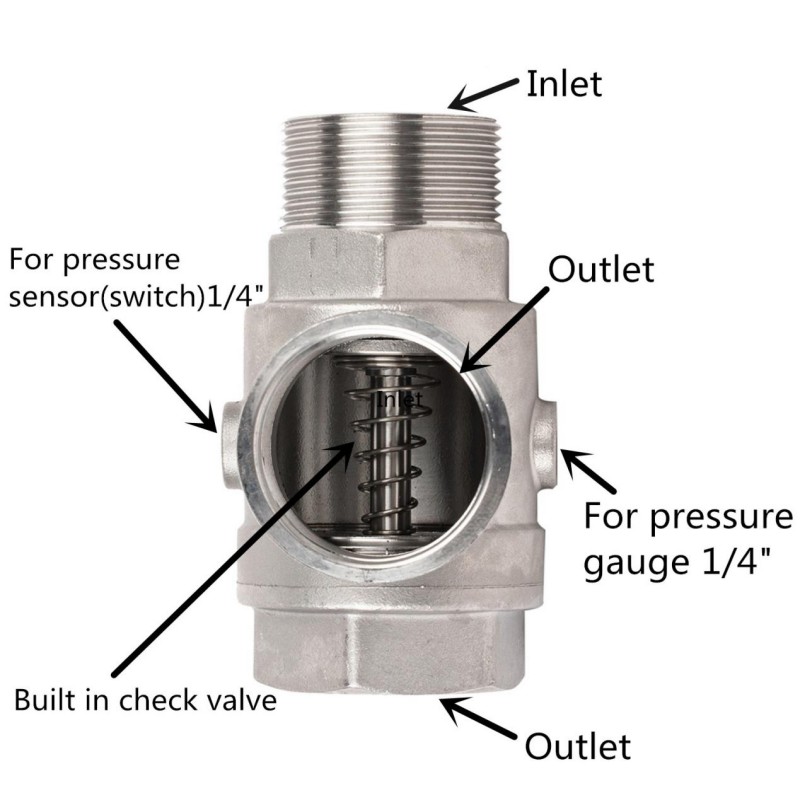
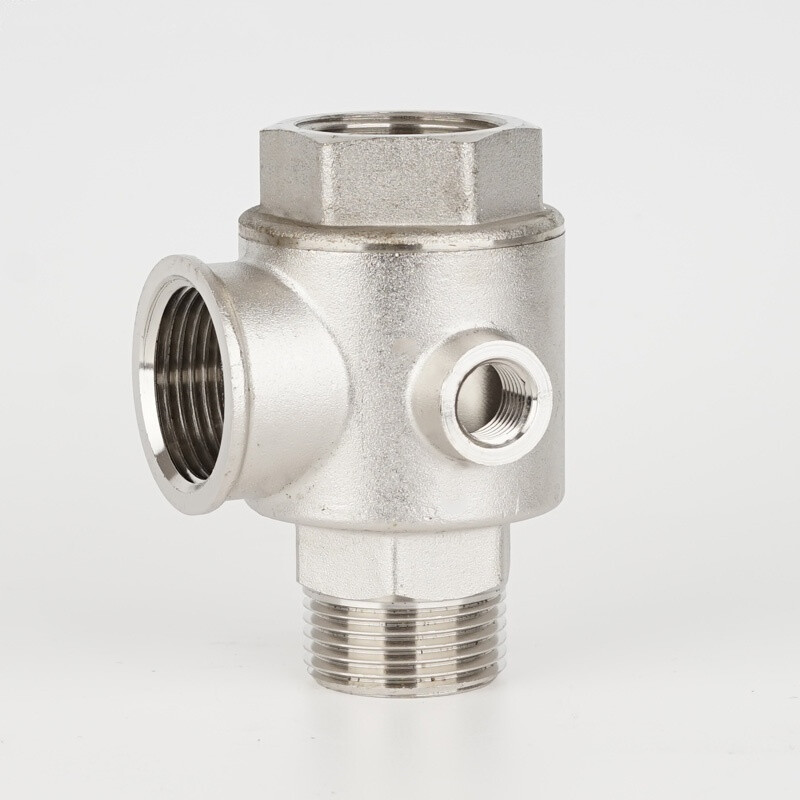
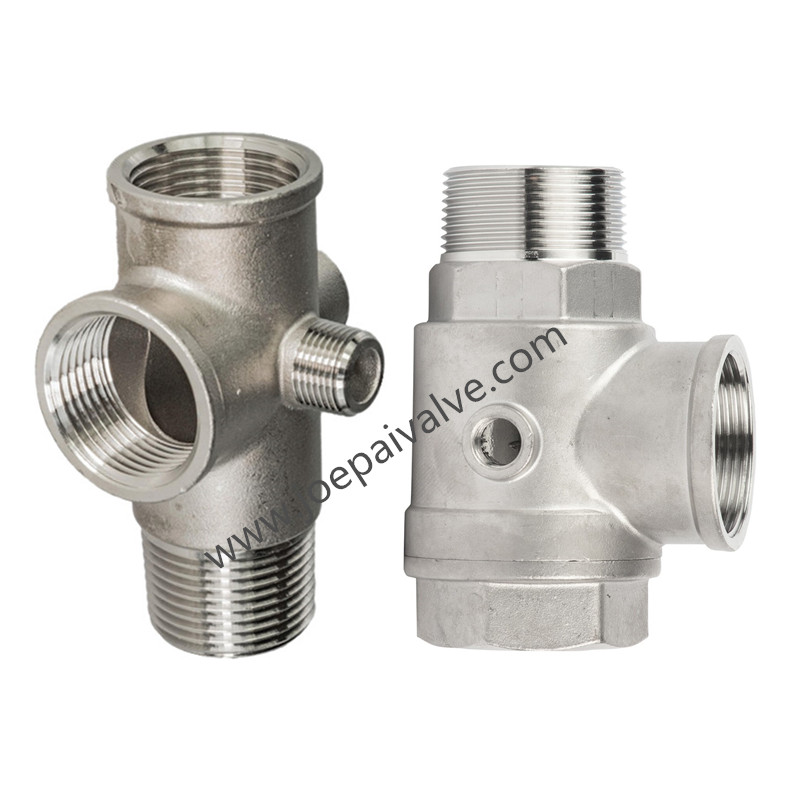
This is a valve device that integrates unidirectional check valve function with multiple interface distribution. A single valve body combines the main passage (inlet and outlet) and multiple auxiliary interfaces, typically including interfaces for pressure gauges, pressure sensor switches, and air tanks. This greatly simplifies the piping design at the pump outlet, saves installation space, and reduces potential leakage points. Its core is a built-in check valve, usually controlled by a spring and media pressure. Its main function is to prevent media backflow and protect equipment such as water pumps.
Opening: When the media pressure at the inlet exceeds the spring preload force, the pressure pushes the disc away from the valve seat, the valve opens, and the media flows forward.
Closing: When the inlet pressure drops or the outlet pressure reverses, the spring force quickly pushes the disc back to the valve seat, forming a tight seal and effectively preventing media backflow.
Due to its spring-supported valve core structure, it overcomes the limitations of traditional lift-type check valves regarding flow direction, achieving versatility for vertical or horizontal installation, greatly facilitating pump station piping layout design.
In pump systems, the five-way check valve plays an indispensable safety role:
Preventing media backflow and water hammer protection: When the water pump suddenly stops, it prevents high-pressure liquid in the pipeline from flowing back and impacting the pump impeller, protecting the pump's core components.
Maintaining pipeline pressure: It prevents media backflow in the pressurized pipeline, helping the system maintain the required pressure during intermittent pump operation, reducing frequent pump starts.Isolating backup systems: In multi-pump parallel systems, it prevents media from the working pump from flowing into the backup pump's pipeline, ensuring that the backup path is always available.
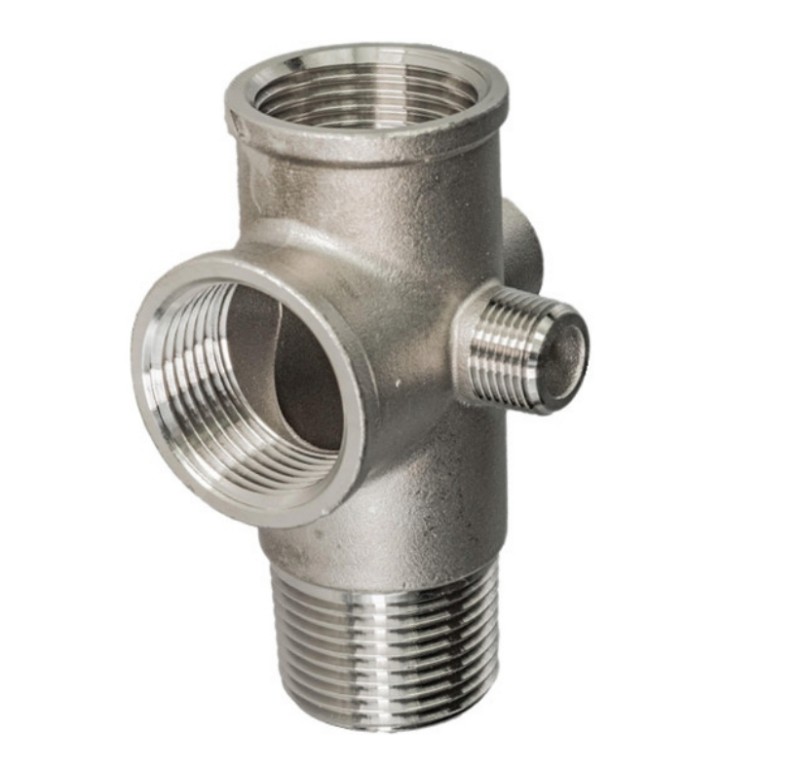
A five-way connector is an integrated pipe fitting with five connection ports. It is a pipe connector with an internal hollow structure and does not have any valve function. Its core function is to distribute fluid or connect multiple devices, forming a compact, multi-functional distribution and collection point.
As a multi-point integrated pipe fitting, it is used to distribute fluid from a single source to multiple different destinations, or to combine multiple branches. It is a purely physical channel that does not alter or control the fluid state. It is suitable for scenarios where the fluid from the main pipeline needs to be directed to multiple parallel devices (such as multiple instruments or multiple branches), or to provide connection points for temporary needs such as pump testing, flushing, and bypass.
In a compact pump outlet pressure control unit, you can see:
Main pipeline: The pump's outlet main pipe (e.g., 1 inch) is connected to one main port of the five-way fitting.
Safety protection: A 1-inch internal thread check valve is installed downstream of the main pipeline (on the other opposing main port of the five-way fitting) to prevent backflow of downstream pressure.
System control: A pressure sensor switch is installed on one 1/4-inch port of the five-way connector to monitor system pressure. When the pressure reaches the set value, the switch can automatically control the start and stop of the pump, achieving system automation and overload protection.
Visual monitoring: A pressure gauge is installed on another 1/4-inch port of the five-way connector, providing operators with real-time, intuitive system pressure readings.
Expansion or pressure relief: The fifth port can be used to connect a safety valve, pressure relief valve, or as an additional backup monitoring interface.
The core differences between the two products are as follows:
| Feature | Five-Way Check Valve | Five-Way Connector |
| Core Function | Check valve function + Interface distribution (Function integration) | Pure pipe connection and diversion (No control function) |
| Internal Structure | Built-in valve core, spring, and other check valve mechanisms | Hollow cavity, no moving parts |
| Main Function | Prevents media backflow, protects equipment, integrates monitoring interfaces | Achieves fluid distribution from one path to multiple paths or multiple paths converging into one |
| System Role | Critical safety and control component | Pipe connection and distribution component |
| Installation Location | Usually fixed to the main pipeline at the pump outlet | Flexible location depending on diversion needs |
Highly integrated, space-saving: Combines the connection points of multiple functional components into one compact connector, greatly simplifying pipe layout and making the system structure smaller and neater.
Easy installation and maintenance: All monitoring and control accessories are centrally located, facilitating installation, debugging, and daily inspection.
Comprehensive functionality: Simultaneously achieves multiple functions at one node, including main channel on/off control, anti-backflow, automatic pressure control, and pressure visualization monitoring.
Reduced leakage points: Compared to using multiple tees and straight connectors, using a single five-way connector significantly reduces potential leakage points and improves system reliability.
You can choose based on the core needs of your pump system:
If you need to prevent water backflow, protect the pump, and want to centrally install pressure gauges and pressure switches to simplify piping, you should choose a five-way check valve. This is a standard, efficient, and safe pump system configuration.
If you already have a separate check valve, or the system only needs to evenly distribute a single fluid stream to multiple branches without specific order requirements, then a five-way connector is more economical and direct.
When choosing these products, you need to match the appropriate material (such as brass, stainless steel) and model based on the characteristics of the system media (corrosiveness, temperature), working pressure, and connection standards (such as thread specifications BSPT, BSP, NPT).
In short, these two types of products, though small, are indispensable key components for building a responsive, safe, and cleverly designed pump system. Through ingenious design, they transform complex fluid control logic into a simple and reliable physical reality.
Contact us for more details.
WhatsApp: +8619957707725